
Today I got good news about someone I’ve never met. An Instagram creator I follow—Isabel Klee (simonsits on Instagram), who takes on medical foster dogs and falls asleep in piles of chewed‑up toys—just found out her book, Dogs, Boys, and Other Things I’ve Cried About, hit number 1 on the New York Times Bestseller List, and I’ve been walking around my kitchen grinning like my own daughter called.
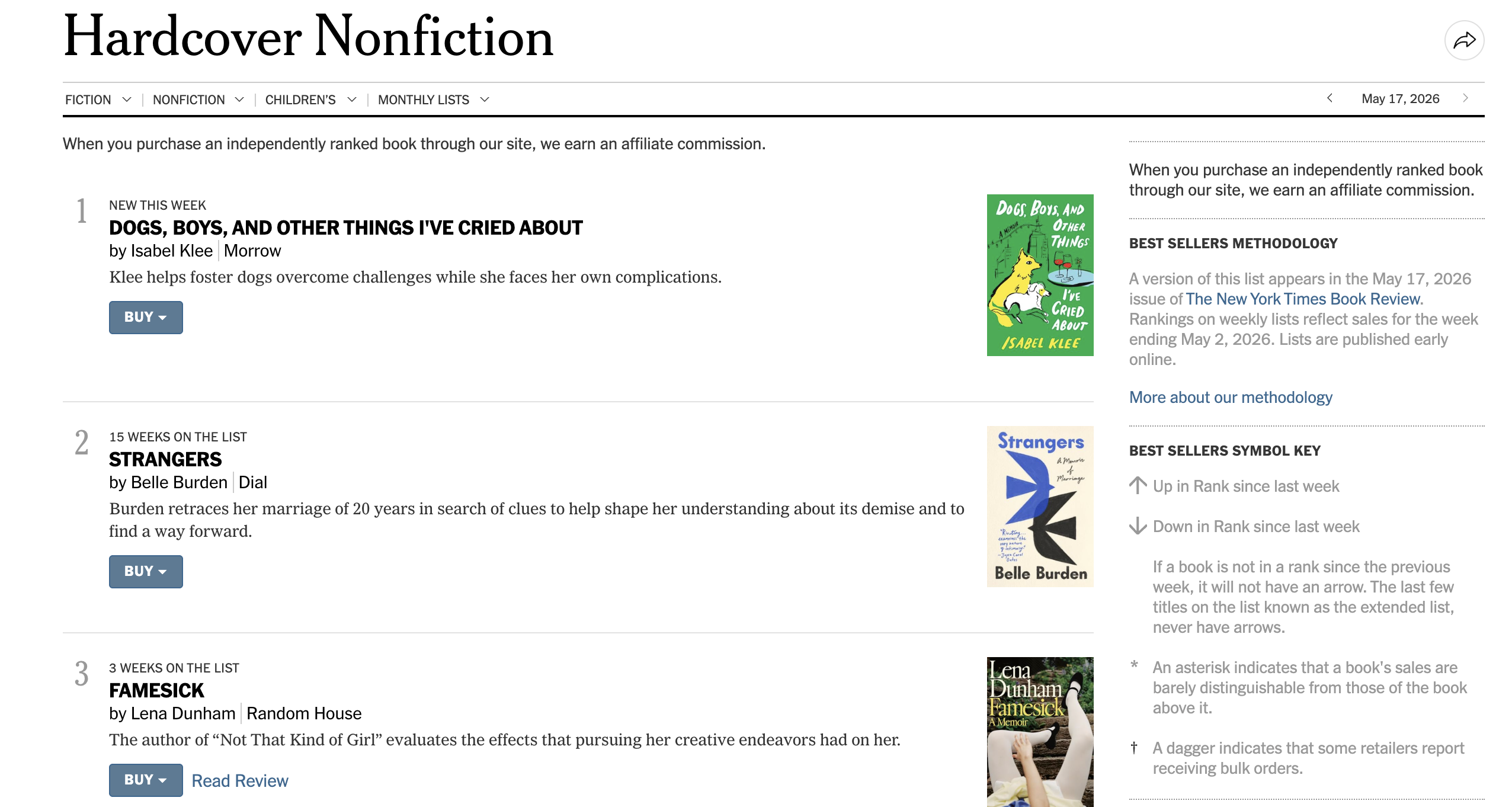
For someone like me, who has spent the past year lecturing herself about cognitive sovereignty, limiting news and social media, and guarding the drawbridge of her mind, it feels a little strange to be this emotionally invested in a stranger’s success.
But there it is: my carefully defended inner kingdom just threw confetti for a woman who doesn’t know I exist.
Over the past few years, I’ve learned the hard way that my nervous system is not built for unfiltered feeds. The more I marinated in outrage, bad news, and “highlight reels,” the more brittle and hopeless I felt, even on ordinary Tuesdays. That’s why I started talking about cognitive sovereignty—my attempt to be queen of the kingdom of my own mind instead of letting the algorithm rule by coup. I’ve been slowly building a moat: fewer apps on my phone, stricter time limits, a policy of exiling any account that leaves me anxious, envious, or numb.
Isabel was one of the rare exceptions I chose to keep. Her posts are not polished highlight reels; they’re middle‑of‑the‑night stories about flea baths, medication schedules, and learning the particular quirks of yet another terrified rescue dog.

Isabel and the famous “Tiki”
Instead of inflaming me, her little videos reliably lower my shoulders and remind me that there are still people in the world quietly sacrificing sleep and social lives so that one more creature can feel safe. In a sea of content designed to keep me scrolling, her account feels like a small, stubborn channel of goodness I’ve intentionally allowed to cross my moat.

At some point, Isabel stopped being “an account I follow” and started feeling like someone I knew, even though our relationship is entirely one‑sided.
Psychologists have a name for this: a parasocial relationship, the phenomenon where we spend enough time with a person’s stories and emotional expressions that our brains file them under “people we care about,” even if they’ve never once said our name.
When I saw her book on the bestseller list, my reaction wasn’t neutral consumer interest; it was full‑body relief, like watching a friend finally cross a finish line I’d seen her training for. That outsized joy told me something important—not about her, but about me and what I’ve allowed to shape my inner life.
We’re used to hearing about social media as a wasteland of comparison and misinformation, and there is plenty of evidence that it can erode our well‑being when we use it passively and without boundaries. But curated with care, it can also offer models of courage, kindness, and persistence that gently recalibrate our sense of what’s normal.
My delight over Isabel’s success is, in a way, proof that this experiment in cognitive sovereignty is doing something: instead of being flooded with dread about the state of the world, I’m unexpectedly practicing how to feel glad for someone else’s hard‑won joy. That feels like a small but meaningful victory in the age of the algorithm.
We don’t get to opt out of that age, but we do get to choose which faces we let sit around our virtual hearth. If an account leaves you more clenched and cynical, that is useful data; if it leaves you softer, more likely to cry happy tears over a rescue dog and a writer you’ll never meet, that is data too. Maybe the quiet rebellion available to us isn’t abandoning the internet altogether, but curating it so ruthlessly that our so‑called “para friendships” become practice in feeling unselfish joy.
So, the next time you notice yourself rooting for a stranger online, instead of rolling your eyes, you might ask: what part of me is this lighting up—and how can I live a little more like that in my own, offline life?


One thought on “Cognitive Sovereignty, but Make It Dog Content”