
I had lunch with Vince at Night and Day yesterday.
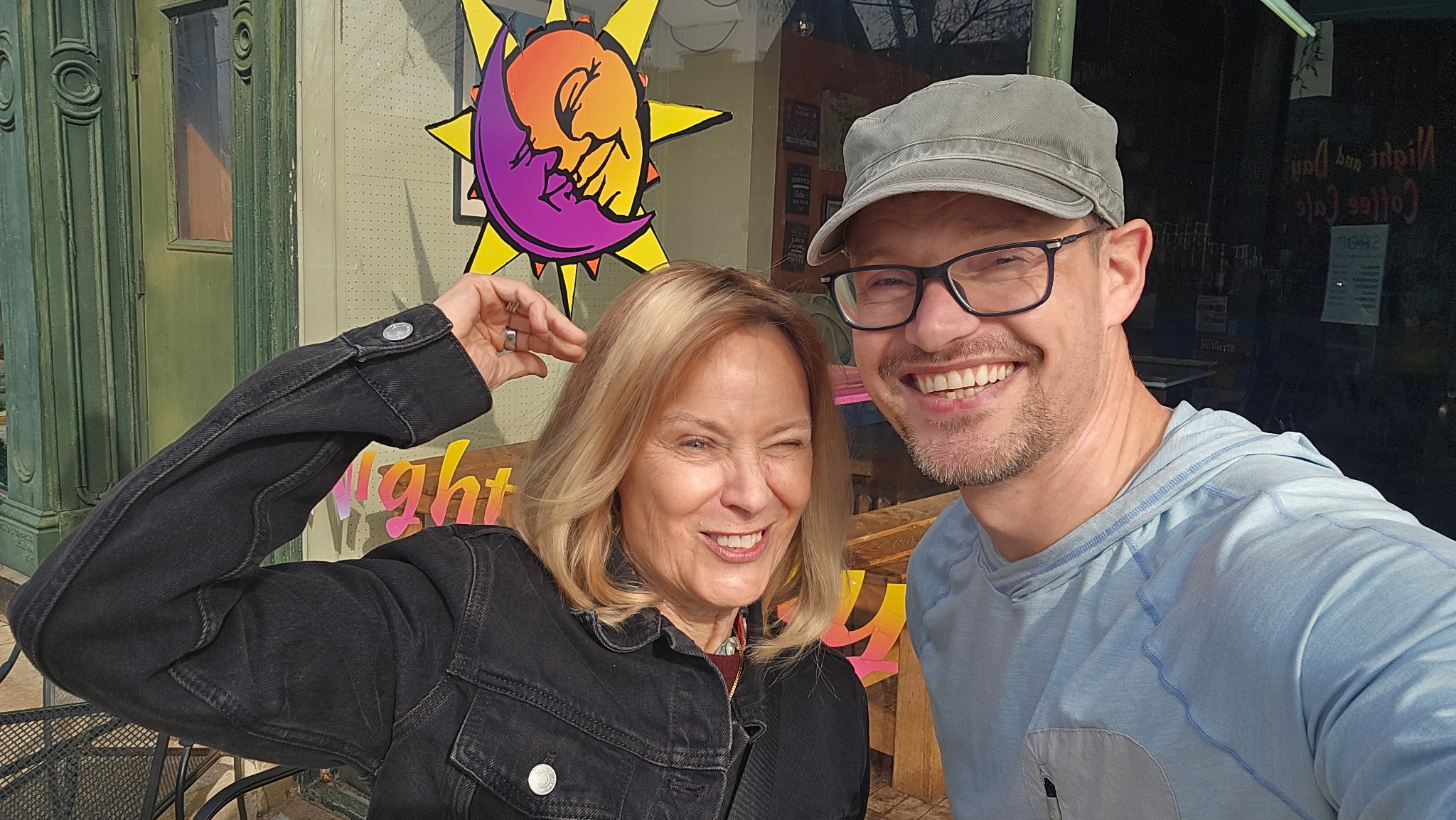
As usual, our convo ranged far and wide. As usual, something he said has me scribbling in my journal all morning.
At one point, I complained that I feel like I have no influence in my grandchildren’s lives because we live so far away.
He said I am like a non-player character in their lives, but there is nothing wrong with that, and it could actually be somewhat freeing.
I don’t play video games, so I was unfamiliar with this term, non-player character.
A non-player character, or NPC, is a character in a game that isn’t controlled by another player. The computer controls the NPC.
I learned in my research this morning that NPC has a negative connotation in gaming circles, referring to a player who just repeats a script and is incapable of independent thought.
Freeing or not, the thought of being an NPC to Obie and Sylvan was not a happy one.
As we sat with our Cortados and sandwiches, the FedEx truck pulled up to the coffee shop with a delivery. The guy got out and walked into the shop with a box.
“He’s an NPC to us,” Vince said.
“But not to himself,” I said. To himself, he’s the main character, and we’re the NPCs.
“Right,” Vince said. “NPCs can provide information, offer help, or deliver a box. The only distinction is who controls the character, not how much the character matters to the story. The NPC is not outside the story, only outside the controls.”
I understood this to mean that even though I don’t control the kids’ lives, I still have a part in their story. I still matter. And I think Vince meant that thinking of myself as an NPC could be freeing because it relieves me of the sadness of having no direct influence on how their lives play out, without loosening my connection to them.
For me, with Obie and Sylvan, it’s not about how much influence I have, but what kind of presence I want to offer when we do connect.
This made me feel better.
Later, a man strode into the shop with the air of a man on a mission. I said, “He’s giving off Main Character Energy.”
We laughed because we recognized that we are all the main characters in our own story, and most of the people we encounter in a day are NPCs, or extras in our movie.
I was reminded of the concept of Sonder from the book The Dictionary of Obscure Sorrows by John Koenig. Sonder is the realization that other people have lives as complex and fully realized as our own, and that everyone is the main character in their own story.

No actual human being is merely background. Even if someone is a non-player character in my life, that doesn’t mean they have a smaller life.
Sonder says: There is much more to you than the part of your life I can see.
Being an NPC says: There may be less for me to manage in your life than I imagine.
But together they suggest an attitude toward others that is full of regard even without full access or control.
And perhaps the freedom of being a non-player character is not believing that I have no influence; it is accepting that I cannot always know what my presence means.


